If you’re an inventor, you’ve probably asked yourself this—or had someone tell you: “You really need a 3D printer.”
They’re not wrong. 3D printers are amazing tools, and the technology has advanced rapidly. But like any tool, a 3D printer is most valuable when you use it for the right job—especially when your goal is to prototype an invention quickly and affordably.
Let’s walk through what a 3D printer can do for an inventor, what it can’t, and whether buying one is the best way for you to prototype an invention.
The Good News: 3D Printing Has Leveled Up
3D printing is no longer “experimental” or reserved for engineering labs.
A $300 machine today can do more than a $10,000 machine could a decade ago. Print quality is higher, reliability is better, and the software ecosystem is dramatically easier to use. Many printers now advertise “print right out of the box,” and in many cases, that’s not marketing hype—it’s reality.
For inventors, this matters because it means you can:
- Prototype an invention quickly (often the same day)
- Test shapes, sizing, ergonomics, and basic fit
- Create multiple versions of a part without waiting on vendors
- Make physical models that are easier to evaluate than a sketch or CAD screenshot
If you’re in the early stages and trying to prove out a concept, 3D printing can speed up the loop from idea → model → improvement.
The Reality Check: 3D Printers Can Still Be Frustrating
Even with modern improvements, 3D printers are not magical “push-button factories.” They’re machines, and they sometimes behave like machines.
Here are a few common pain points inventors run into:
- Clogged printer heads
Especially if you don’t set the printer correctly for the material you’re using. - Supports that are painful to remove
If support settings aren’t dialed in, you’ll spend more time removing supports than you spent printing. - Material choice confusion
PLA, PETG, ABS, TPU… each has different strengths, weaknesses, and printing quirks. - Occasional print failures
Even experienced users get failed prints. You will too. That’s normal.
The learning curve has diminished rapidly, but you should still assume a little time spent learning settings and troubleshooting—especially if you plan to prototype an invention with multiple iterations.
The Part Inventors Forget: You Need a CAD File
This is the big one.
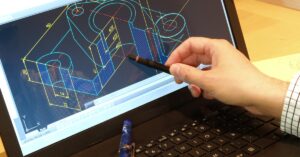
A 3D printer doesn’t help you prototype an invention unless you have a 3D model to print. That means creating a CAD file (or hiring someone to do it). If you’re not already a CAD user, plan on investing time learning how to model parts accurately.
And yes—CAD can be tedious at first. It’s not “creative brainstorming.” It’s precise, exact geometry. But it’s also one of the most important skills (or resources) involved when you want to prototype an invention in a way that can eventually transition to manufacturing.
A great 3D printer won’t help if you can’t create the design you want to print.
So… Should an Inventor Buy a 3D Printer?
Here’s the bottom line:
Yes, many inventors benefit greatly from owning a 3D printer—especially if they frequently need to prototype an invention.
But you should go in with realistic expectations.
A 3D printer is ideal for:
- Fast concept models
- Fit checks and form studies
- Iteration and refinement
- Early-stage proof of concept
A 3D printer is not ideal for:
- Finished production parts (in most consumer product cases)
- High strength/high heat environments without careful material selection
- Projects where you won’t be learning CAD or outsourcing CAD work
If your invention requires frequent iterations, owning a printer can save time and money. If you only need a few prints, outsourcing may be smarter.
Which 3D Printer Should You Buy?
You don’t need to overspend for your first machine. Entry-level printers today are extremely capable for inventors who want to prototype an invention.
Here are a few strong brands to consider:
Bambu Lab
Known for speed, reliability, and a highly automated user experience. A great choice if you want fewer “tinkering moments.” Entry-level models often start around $400–$600.
Flashforge
User-friendly machines with good support and solid consistency. Popular in classrooms and home workshops. Entry-level options often land around $300–$500.
Creality
Very common and very affordable, with a massive community and lots of upgrade options. Entry-level printers often start around $250–$400.
All three can help you prototype an invention successfully. The best choice usually depends on whether you want a smoother experience (spend a bit more) or you’re okay tinkering to save money.
Remember: 3D Printing Is Only One Prototype Tool
Many inventors get stuck in “3D printer mode,” endlessly printing minor revisions.
But prototyping an invention often includes other methods too:
- Simple foam models or cardboard mockups
- Machined prototypes for stronger test parts
- Off-the-shelf components combined into functional assemblies
- Pre-production manufacturing methods once your design stabilizes
3D printing is powerful—but it’s only one tool in a bigger product development journey.
How Product QuickStart Helps Inventors Prototype an Invention
At Product QuickStart, we help inventors prototype an invention in the smartest way for their specific situation—using the right tools at the right time.
That can include:
- Converting your concept into a CAD model that’s actually printable and manufacturable
- Rapid prototyping with 3D printing and other methods
- Design refinement so your prototype tests the right things (instead of just looking good)
- Helping you plan the transition from prototype to manufacturing
Sometimes buying a printer makes perfect sense. Sometimes it’s a distraction. We’ll help you choose the path that moves your invention forward.
Final Thought
A 3D printer can be an excellent way to prototype an invention—especially when you need fast iterations and hands-on learning. But it’s not a shortcut around CAD, design discipline, or the realities of manufacturing.
Add a printer to your inventor toolbox if it fits your workflow. Just don’t confuse printing prototypes with building a product business.
Ready to prototype an invention the right way?
Contact Product QuickStart and let’s turn your idea into something real—then make it manufacturable.